August 17, 2026
How to Plan a Friends' Ski Trip to Breckenridge (Without the Drama)
Plan a friends' ski trip to Breckenridge without arguments over costs, meals, ski levels, or bedrooms. A practical guide to group lodging and logistics.
The Group Chat Is Not a Trip Plan
A friends' ski trip to Breckenridge sounds easy when it is still six months away. Everyone is in. Everyone is flexible. Everyone is definitely going to book the flight this week.
Then the questions begin. Which dates? How much is too much? Who gets the king bed? Are all ten people skiing every day? Is dinner a reservation, a grocery run, or six separate opinions delivered at 6:45 p.m.?
The skiing is rarely what makes a group ski trip difficult. The trouble comes from unspoken budgets, mismatched expectations, and trying to make a large group move as one cheerful organism. It will not. Plan for that, and the trip gets much easier.
A good Breckenridge trip needs a few firm decisions before anyone pays, then enough flexibility for friends to have different days without treating every split plan as a diplomatic incident.
Start With the People Who Will Actually Book
Do not choose a house based on the number of people reacting with a thumbs-up in the group chat. Ask for a real commitment by a specific date, ideally with a deposit attached.
Before searching for a large group cabin near Breckenridge, settle four things:
- The dates. Pick one window rather than circulating seven possibilities forever.
- The committed head count. Count only people prepared to pay their share.
- The trip budget. Include lodging, transportation, food, and skiing, not just the nightly rate.
- The cancellation rule. Decide what happens if someone backs out after the lodging is booked.
That last conversation is mildly awkward. It is still less awkward than asking eight friends to absorb someone else's share two weeks before arrival.
Choose one organizer to make the reservation and keep the essential details in one shared document: address, arrival instructions, bedroom plan, payment deadlines, grocery list, and transportation. The group chat can continue doing what it does best, which is burying useful information under weather screenshots and jacket polls.
Agree on the Real Budget
Ski trips contain more spending categories than they first appear to. A fair budget should account for:
- Lodging and applicable fees
- Flights or fuel
- Rental cars, shuttles, and parking
- Lift access and equipment rentals
- Groceries, restaurant meals, and drinks
- Lessons or other activities
- A buffer for plans that change
People do not need identical budgets, but they do need to know what kind of trip they are joining. “We will figure out food later” can mean pasta at the house to one person and dinner reservations every night to another.
Share estimated costs before booking. Keep optional spending optional, especially restaurant meals, lessons, and extra activities. Nobody should have to defend taking a rest day because the group quietly assumed five consecutive days of lift tickets.
For lodging, decide whether everyone pays an equal share or whether bedroom quality changes the split. Equal shares are simple when rooms are comparable. A weighted split may feel fairer when one pair gets a private king suite and someone else gets a bunk bed. Make that decision before room assignments, while everybody is still capable of discussing it as arithmetic rather than destiny.
Pick Dates Before You Build the Itinerary
For a group, date selection is usually a compromise among work schedules, travel costs, and the kind of skiing everyone wants. Peak holidays can bring stronger demand throughout town, while other winter weeks may offer more flexibility. Conditions and pricing change from season to season, so use current resort information and live booking calendars rather than a confident blog post written months earlier.
Once the dates are chosen, set two deadlines:
- A deadline for everyone to confirm and pay the lodging organizer
- A deadline for each skier to handle lift access, rentals, and lessons
Do not make one person responsible for purchasing every part of the trip unless that person has actively volunteered for a new unpaid career in travel administration.
Mixed Ski Levels Are a Feature, Not a Scheduling Error
Most friends' ski trips include a mix: experienced skiers chasing an early start, cautious intermediates, first-timers taking lessons, snowboarders with different terrain preferences, and at least one person who would like everyone to know that a hot tub is also a winter activity.
Trying to keep the entire group together all day usually produces waiting, frustration, or somebody ending up on terrain they do not enjoy. Use smaller ski groups instead.
Pair People by Pace
Before the first morning, ask everyone to describe their comfortable level honestly. Build pairs or small groups with similar goals, then choose one or two meeting points for the day. Lunch and the final run are more realistic reunion plans than maintaining a ten-person formation from first chair onward.
Let Beginners Learn Properly
A friend who has skied for years is not automatically the right instructor. Beginners often benefit from a formal lesson, where they can learn at an appropriate pace without feeling that they are delaying the group. Experienced friends can meet them later, once everybody has had a better morning.
Give Non-Skiers a Real Plan
Not skiing should not mean sitting in the rental until the group returns. Breckenridge and the surrounding area offer plenty of winter alternatives, though availability depends on weather and seasonal operations. Browse things to do near Breckenridge together and let non-skiers choose their own day rather than assigning them errands by default.
Make Splitting Up Normal
State this before the trip: nobody is required to join every ski day, restaurant meal, or evening plan. Friends are allowed to be tired. They are also allowed to ski different terrain without submitting a written explanation.
Transportation Needs More Than One Sentence
“Everyone can ride together” is not a transportation plan until you have counted people, bags, skis, and the hours each person intends to keep.
Work out how the group will get from the airport to the house, how many vehicles will be available, and whether those vehicles can carry the gear. Winter drivers should be prepared for mountain conditions and check current road and weather information before traveling.
For daily plans, more than one vehicle gives a group useful flexibility. The early crew can leave first. Beginners can head out later for a lesson. Someone taking a rest day is not stranded. Tired skiers can return to the house without forcing everyone else to stop.
Lodestone Retreat is in Blue River, two miles south of Breckenridge, so guests should plan on having a vehicle. The tradeoff is a quieter, wooded home base with room to spread out after time in town. Decide who is comfortable driving in winter, and do not assume the same person wants to be the designated driver for every dinner.
Plan Meals Before Everyone Is Hungry
Feeding a group of friends for several days can save money and produce some of the best evenings of the trip. It can also become a daily argument conducted while everyone is cold, tired, and wearing one sock.
Keep the system simple:
- Eat easy breakfasts at the house
- Pack or buy lunch based on each ski group's plan
- Assign cooking teams for a few dinners
- Choose restaurant nights in advance
- Keep one no-effort backup dinner on hand
- Ask about allergies and dietary restrictions before the grocery run
A full kitchen matters, but so does dividing the work. One team shops, one cooks, and someone else cleans. Rotate the jobs. “I provided morale” is not a recognized kitchen assignment.
Do not split every grocery item line by line unless the group genuinely enjoys forensic accounting. A shared trip fund or a receipt-splitting app is usually easier. Keep expensive personal items separate and agree on how alcohol will be handled, since that is often where equal splitting stops feeling equal.
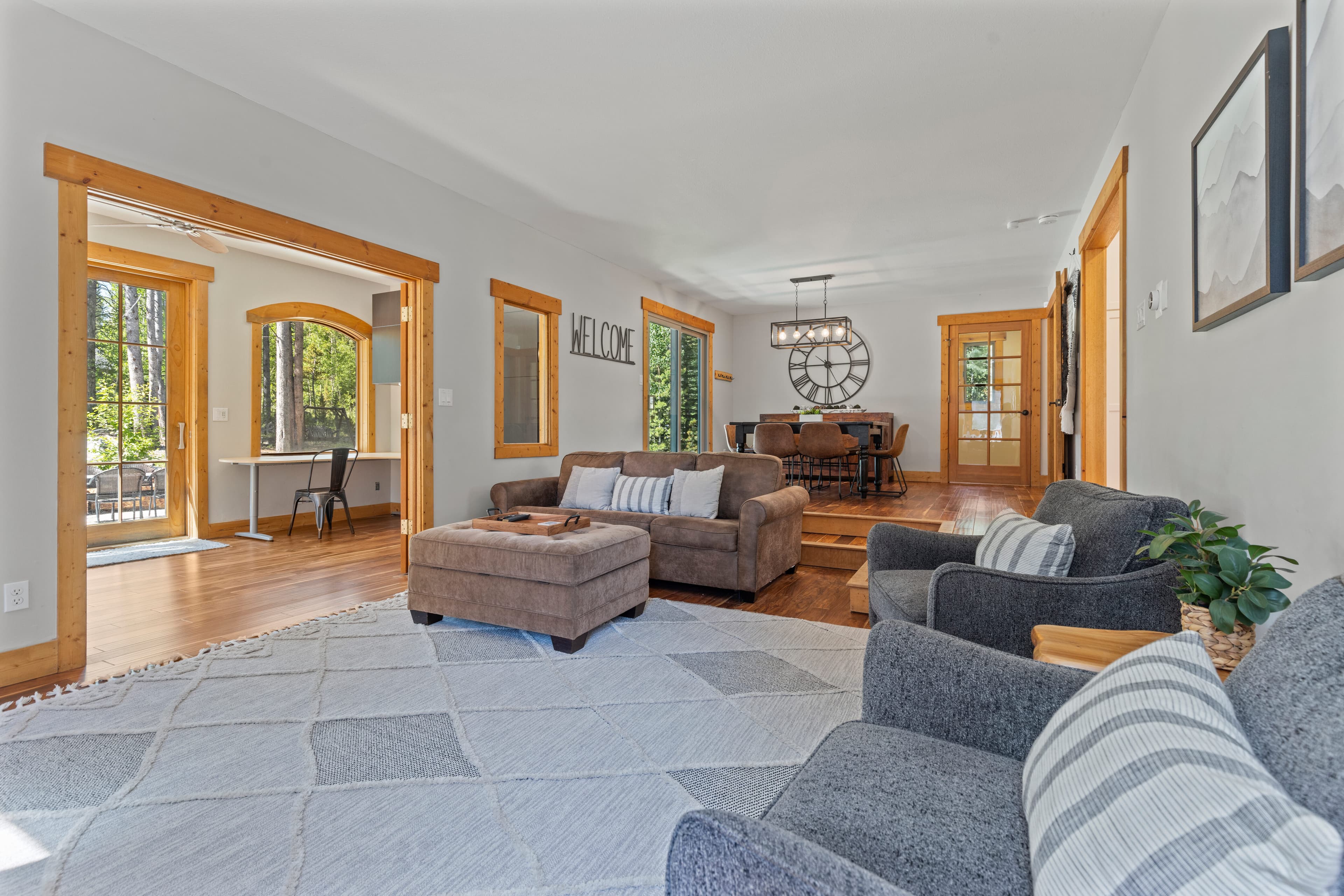
At Lodestone Retreat, the full kitchen, dining area, and nearby main living space make group meals practical. The lower-level wet bar and second living area also give everyone somewhere to go while dinner is underway, which is considerably better than nine people standing in the kitchen asking whether they can help.
Choose Lodging for the Hours You Are Not Skiing
A Breckenridge group cabin should do more than hold the correct number of sleeping bodies. Friends need common space, privacy, bathrooms, gear storage, and a layout that still works when half the group stays home.
When comparing rentals, ask:
Are the Bedrooms Actually Suitable?
Read the bed configuration, not only the occupancy number. Ten guests may fit very differently across private bedrooms, bunks, sofa beds, and shared rooms. Assign rooms before arrival and make sure every guest knows what they are paying for.
Lodestone Retreat sleeps up to ten guests across four bedrooms: a king primary suite, two queen bedrooms, and a lower-level bunk room with two bunk beds. The home spans three levels, with stairs between them, so groups with significant mobility limitations should review the layout carefully.
Is There More Than One Place to Gather?
One living room can become crowded quickly when some friends want a movie, others want to talk, and somebody is trying to recover quietly from an ambitious day. Two living spaces let the group separate without sending anyone to a bedroom.
At Lodestone Retreat, the main level has comfortable seating near the wood-burning stove, kitchen, dining area, and sunroom. Downstairs, the second living space has a TV, wet bar, ping pong, board games, and additional seating. The private hot tub offers another option after skiing.
That arrangement helps a group spend time together without requiring all ten people to want the same evening.
Can the House Handle a Rest Day?
Weather changes. Legs get tired. Someone may decide that three ski days were enough. A good rental should still feel like part of the vacation when people stay in.
Look for comfortable seating, reliable WiFi, games, a useful kitchen, laundry, and enough separation for quiet and noisy activities to happen at once. Lodging layout is not the glamorous part of planning a friends' ski trip, but it has a remarkable influence on whether everyone still likes each other by checkout.
Write Down the Few House Rules That Matter
Nobody wants a mandatory orientation presentation on vacation. A short expectations note, however, prevents predictable trouble.
Before arrival, make sure the group knows:
- Quiet hours and neighborhood expectations
- Parking limits
- Smoking and pet rules
- Hot tub etiquette
- Check-in and checkout responsibilities
- Who to contact if something goes wrong
Lodestone Retreat is in a residential Blue River neighborhood. Quiet hours are 9:00 p.m. to 8:00 a.m., and parties or events are not allowed. The home is designed for group trips, not for turning a ski weekend into a venue.
Respecting the house also means sharing the small jobs. Start the dishwasher. Put damp gear where it belongs. Do not leave one person to clean the kitchen because they made the tactical error of waking up first.
A Low-Drama Four-Day Ski Trip Plan
The best itinerary has anchors, not an hourly constitution.
Arrival Day
Meet at the house, assign rooms, unpack, and confirm the next morning's ski groups. Eat an easy dinner at home. This is not the night to debate six restaurants after a travel day.
First Ski Day
Let each pace group leave on its own schedule. Meet for lunch only if it is genuinely convenient, then regroup at the house. Keep dinner casual and compare notes without converting the conversation into a vertical-feet contest.
Flexible Middle Day
Some friends ski again. Beginners take a lesson. Non-skiers spend time in Breckenridge or choose another activity. Meet back for a group dinner, games, or the hot tub. This is often the best day because everybody has stopped pretending the group needs one itinerary.
Final Full Day
Choose skiing, a rest day, or a mixed plan based on energy and conditions. Use the last night for dinner at the house or a reservation made well in advance. Confirm checkout tasks before people start packing.
The Five Decisions That Prevent Most Drama
If the planning document contains nothing else, settle these:
- Who is committed and what happens if someone cancels?
- What costs are shared, and how are bedrooms priced?
- Who is driving, and can people return at different times?
- Which meals are planned at the house?
- Is everyone free to skip an activity without guilt?
Those decisions do more for group harmony than a color-coded itinerary ever will.
Make Blue River Your Group's Home Base
Lodestone Retreat is a four-bedroom mountain home in Blue River, a short drive south of Breckenridge. It sleeps up to ten and gives a group the practical things that make a ski week work: a full kitchen, 3.5 bathrooms, two distinct living spaces, laundry, games, a wood-burning stove, and a private hot tub among the pines.
Explore the property layout and amenities, then build a flexible list of things to do near Breckenridge. Once the committed friends, dates, and budget are real, check availability directly and give the group chat something useful to celebrate.
Plan Your Blue River Getaway
Book your stay at Lodestone Retreat — a spacious 4-bedroom mountain home just 2 miles from Breckenridge.
Check Availability