September 7, 2026
Cooking at Altitude: Meal Planning Tips for Your Mountain Vacation
Cooking at altitude on a Breckenridge vacation? Learn how high elevation changes boiling, baking, and timing, plus a practical meal plan for a group staying in Blue River.
Your Recipes Do Not Know Where They Are
The first mountain dinner is usually where people discover that elevation has opinions about food. Pasta water takes forever and the noodles still come out chalky. Rice is crunchy on schedule. A boxed brownie mix that has never failed anyone comes out of the oven with a sunken middle and a faintly smug expression.
Nothing is wrong with the kitchen. The recipe was written for sea level, and Blue River is not remotely near sea level. Breckenridge sits at roughly 9,600 feet, and Lodestone Retreat is a couple of miles south at about 10,300 feet. At that height there is less air pressing down on your pot, and that single fact changes boiling, baking, hydration, and how long everything takes.
The good news is that cooking at altitude is not difficult once you know which rules bend. Most of the fixes are small. The rest is meal planning, which matters more on a group trip than any technique.
What Elevation Actually Changes
Lower atmospheric pressure does three practical things to your cooking.
Water boils cooler. Water boils at 212°F at sea level. At 10,000 feet it boils at about 194°F, according to the USDA-derived elevation table published by the National Center for Home Food Preservation. Your pot still boils enthusiastically; it is simply doing so at a lower temperature. Anything cooked in water needs more time, not more heat.
Leavening gets aggressive. With less pressure holding them down, the gas bubbles in dough and batter expand faster. Colorado State University Extension notes that at 3,000 feet and above, baked goods may need changes in time, temperature, or ingredients. Cakes rise fast and then collapse. Cookies spread into one continental cookie.
Everything dries out faster. The air up here is dry, liquids evaporate more quickly, and flour itself tends to be drier and absorbs more liquid. Batters and doughs that looked right at home look thick here.
That is the whole mechanism. Now the adjustments.
Boiling, Simmering, and Braising
Water-based cooking is where most guests hit the wall on night one.
- Pasta and rice take longer. Start tasting past the package time rather than trusting it. Rice benefits from a slightly longer cook and a full rest with the lid on.
- Dried beans and lentils take much longer. If beans are part of the plan, either start early or bring canned. Nobody wants chili at 9:45 p.m.
- Soups, stocks, and braises need extra time. A long simmer at 194°F is a gentler simmer. Add time before you add heat, because cranking the burner only boils the liquid away faster.
- Cover your pots. A lid keeps liquid from evaporating and helps hold temperature.
- Boiling harder does not help. Once water is boiling, it will not get hotter. A rolling boil and a lazy boil are the same temperature.
- Add liquid as you go. Sauces and stews reduce faster than you expect in dry air. Keep extra broth or water nearby.
For meat, ignore the clock and use a thermometer. Cook times shift at elevation, but the safe internal temperatures published by USDA do not. This is one place to be boring and precise.
A pressure cooker, if you travel with one, sidesteps most of this by raising the boiling point inside the pot. It is a legitimate cheat code for beans, stews, and tough cuts.
High-Altitude Baking, Without a Chemistry Degree
Baking is the fussiest category, which is why "high altitude baking" is a search term and "high altitude boiling" is not. The guidance below follows Colorado State University Extension's recommendations.
Cakes and cake-like quick breads
These are the most delicate. Typical adjustments include slightly less leavening, slightly less sugar, a bit more liquid, and a modestly higher oven temperature so the structure sets before the batter overexpands. Many boxed mixes print high-altitude directions on the side of the package. Use them. They exist because the manufacturer already ran your failed experiment.
Cookies
Sugar and fat make cookies spread even at sea level, and elevation encourages the habit. CSU Extension suggests a slight decrease in baking powder or soda and in fat or sugar, along with a slight increase in liquid, flour, and baking temperature. Chilling the dough helps. So does parchment paper and putting dough on room-temperature sheets instead of one you just pulled from the oven.
Yeast breads
Dough rises too fast up here, which costs you texture and flavor. The fixes are to use less yeast, punch the dough down and let it rise a second time, or let it rise in the refrigerator to slow things down. Let dough rise until just doubled; over-proofing produces a heavy, dry, or collapsed loaf. Because mountain flour is drier and thirstier, you may need a little more liquid or a little less flour. For better volume, CSU recommends flour with at least 12 percent protein, which usually means bread flour or whole wheat.
Biscuits and muffins
The sturdier quick breads mostly survive without help. If they come out tasting faintly bitter or soapy, that is unneutralized baking soda or powder. Reduce the leavening slightly next time.
Vacation-specific advice
Do not make your most ambitious dessert on the first night in an unfamiliar oven at an unfamiliar elevation. Bring a mix with high-altitude instructions, buy something excellent in town, or make a dessert that does not depend on rise: crisps, cobblers, bars, ice cream sundaes, or the pan of brownies everyone will eat regardless of how it looks.
Also worth noting for anyone with canning ambitions: home canning requires altitude-specific processing times and pressures for safety, and those adjustments are not optional. That project belongs at home with a tested recipe, not on vacation.
Altitude Affects the Cooks, Too
Meal planning at 10,300 feet is partly a food problem and partly a people problem. The CDC notes that acute mountain sickness affects about 25 percent of visitors sleeping above 8,000 feet in Colorado, and its acclimatization guidance includes avoiding alcohol for the first 48 hours and keeping exercise mild early on. Appetites can shrink, thirst signals get unreliable, and a first-night cooking marathon after a travel day is an ambitious plan.
Practical translation for the kitchen:
- Keep water on every counter and encourage people to drink before they are thirsty
- Go easy on the arrival-night wine, especially if anyone is prone to altitude headaches
- Plan the simplest possible first dinner
- Have snacks out for people whose appetites are lagging
- Save the big cook for night two or three
If anyone in your group has health concerns or has struggled at elevation before, talk to their doctor before the trip rather than troubleshooting at the house.
A Meal Plan That Works for a Full House
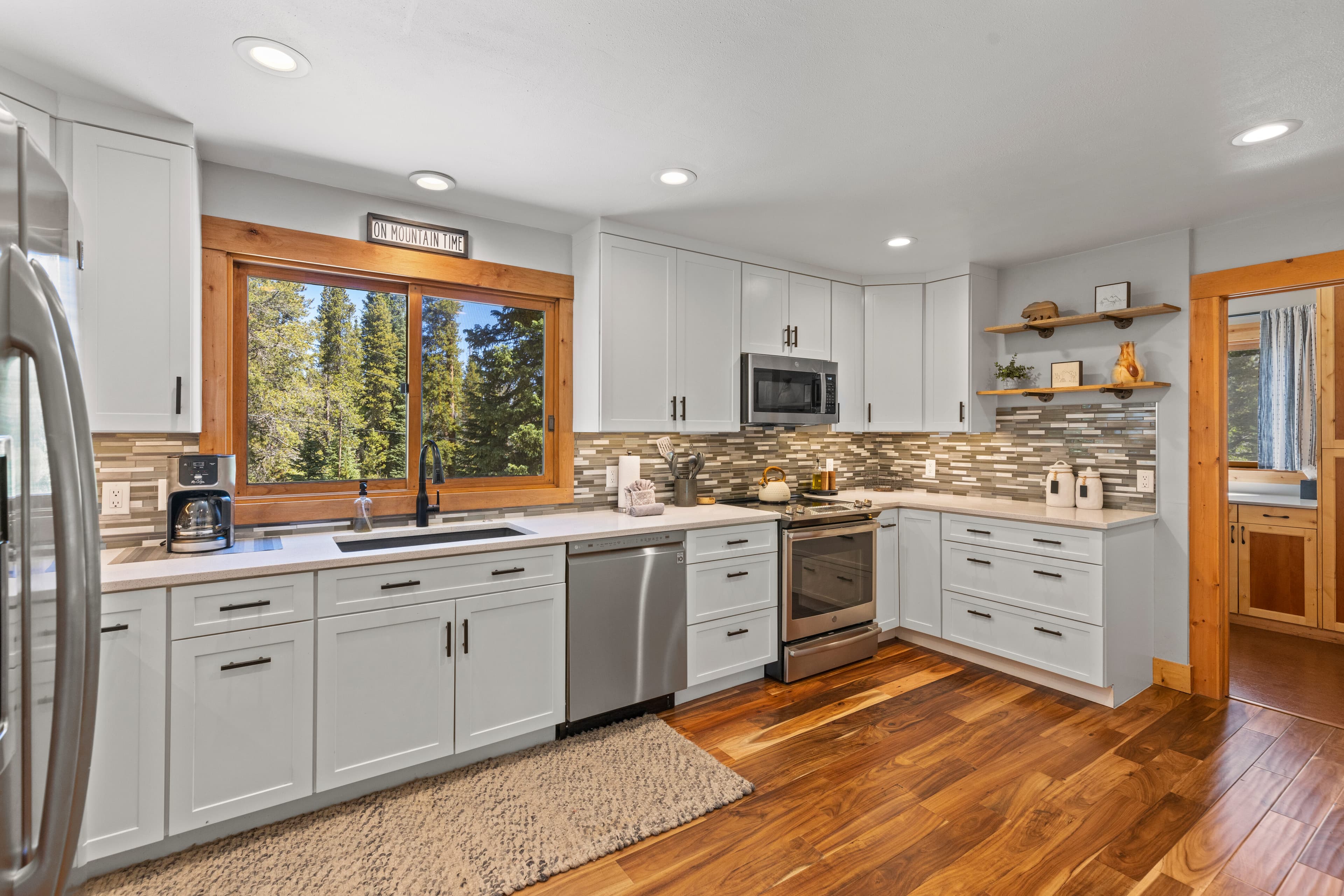
Lodestone Retreat sleeps up to ten, and feeding ten people is a logistics exercise more than a culinary one. The kitchen is set up for real cooking, with seasonings, serving dishes, and a grill outside. Guests have cooked full holiday dinners here without an emergency store run. What tends to go wrong is not equipment. It is nine people standing around at 7 p.m. deciding.
A structure that works:
- Assign dinners before you arrive. One family or couple owns each night, including shopping and cleanup. This eliminates the nightly negotiation and the receipt spreadsheet.
- Make night one nearly effortless. Chili, pasta with jarred sauce, tacos, or a sheet-pan dinner. Something that survives a delayed flight and a tired cook.
- Keep breakfast self-serve. Eggs, oatmeal, yogurt, fruit, bagels, and a lot of coffee. People wake up at different hours anyway, especially on ski trips.
- Leave lunch flexible. Skiers eat on the mountain, hikers pack sandwiches, and the rest-day crew grazes. Do not schedule it.
- Stock one backup meal. Frozen pizza or a soup you can heat in fifteen minutes, reserved for the night nobody wants to cook.
- Pick one town night. Book it early and stop debating restaurants for the rest of the week.
Shopping notes
Summit County grocery stores are well stocked, but a full grocery run with the whole group after a travel day is its own form of punishment. Order ahead or send two people while everyone else unpacks. Bring specialty ingredients, favorite spices, and any dietary staples with you, since selection at 9,000 feet is not the same as at home. Our packing list covers the kitchen and grocery items worth bringing along.
Meals that are forgiving at altitude
- Chili, stew, and soups, which only benefit from longer simmering
- Tacos and fajitas, which scale to any headcount and any picky eater
- Sheet-pan chicken and vegetables, since roasting is barely affected
- Grilled meat and vegetables, using the outdoor grill
- Pasta bakes, which tolerate imprecise timing
- Breakfast-for-dinner, which children treat as a holiday
Meals to think twice about
- Soufflés, angel food cake, and anything else that lives or dies on rise
- Dried beans from scratch on a weeknight
- A first attempt at homemade bread
- Deep frying in a rental kitchen, which is a bad idea at any elevation
Why the Kitchen Matters More on a Mountain Trip
Eating out for every meal near Breckenridge gets expensive fast, and moving a party of ten into town three times a day turns into a transportation project. Cooking at the house is the single easiest way to control the budget and reclaim your evenings, which is exactly why the kitchen is worth checking before you book anywhere.
At Lodestone Retreat, the main level puts the kitchen next to the dining area and the living space with the wood-burning stove, so whoever is cooking is not exiled from the group. The lower level has a second living area with a wet bar, games, and a TV, which is where the people not cooking should probably go. There is a grill outside for summer, and a private hot tub for the part of the evening after the dishwasher is running.
See the property photos and full amenity list if you want to check the kitchen before you plan the menu. If you are still working out arrival logistics and drive times for the grocery stop, the getting here guide covers routes and travel timing, and the FAQ answers check-in, parking, and house questions that tend to come up while a group is planning meals.
The Short Version
Add time, not heat. Trust a thermometer over a clock. Reduce the leavening and add a little liquid when you bake. Drink more water than feels necessary. Keep the first night simple and assign the rest.
Do that and cooking at altitude stops being a hazard and starts being one of the better parts of the trip: everyone in one warm room, dinner taking slightly longer than expected, nobody in a hurry.
Plan Your Blue River Getaway
Book your stay at Lodestone Retreat — a spacious 4-bedroom mountain home just 2 miles from Breckenridge.
Check Availability